During hard exercise, the capacity for O2 consumption can be limiting. When oxidizing carbohydrate rather than fat you derive 28% more energy per unit O2 consumed. With prolonged exercise, less carbohydrate and more fat begins to be oxidized. The limiting factor shifts from oxygen supply to glycogen supply.
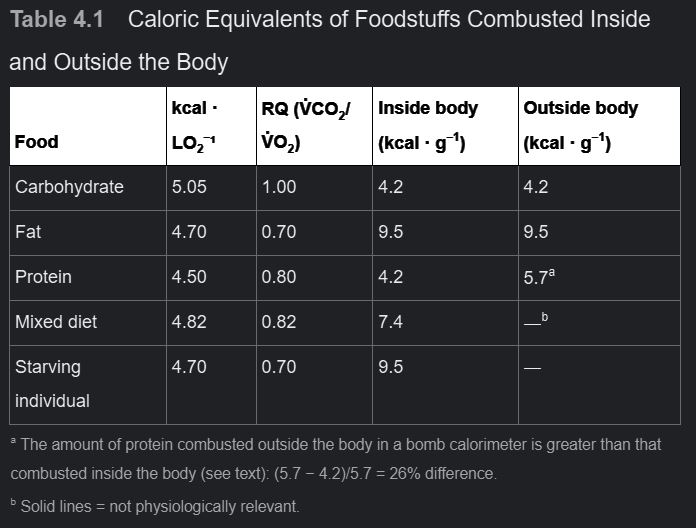
As shown in the table above; on an oxygen basis carbohydrate yields more energy (28% more), but on a mass basis fats provide 2.3 times more energy (126% more). Practically speaking, during mild-moderate intensity exercise (long-distance endurance events), glycogen becomes the limiting factor, not oxygen, leading to the body preferring fat oxidation. The authors of this textbook point out that this type of explanation is known as a teleological explanation; meaning, the purpose of something is used to explain its operation. The authors note that there are enzymatic explanations for the body’s choice on energy substrate.
Brooks, George A., Thomas D. Fahey, and Kenneth M. Baldwin. Exercise Physiology: Human Bioenergetics and Its Applications. 6th ed., Human Kinetics, 2026.